


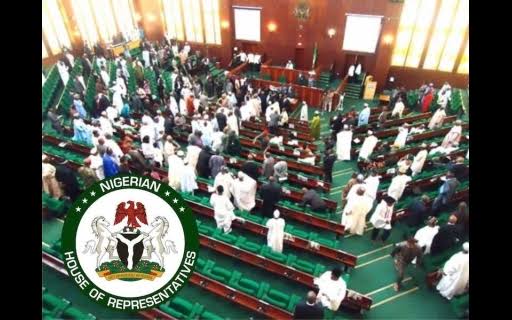
The Chairman of the House Committee on Internal Security, Garba Ibrahim Muhammad, has revealed that the National Assembly previously received terrorist threats to bomb the complex, prompting calls for stronger internal security measures.
Speaking Tuesday in Abuja during a public hearing on a bill seeking to establish a Legislative Security Directorate, Muhammad said the parliament has become a target for criminal elements exploiting lapses in its security system.
“We have received threats from terrorists to bomb the National Assembly Complex and threats from protesters to lock it up. Legislators are also exposed to risks from constituents and others who easily access their offices without formal appointments,” he said.
The hearing focused on “A Bill for an Act to Establish the Legislative Security Directorate in the National Assembly, Provide for the Qualification and Condition of Service of the Sergeant-at-Arms and Other Personnel, and for Related Matters, 2024 (HB 1632).”
Muhammad said the bill aims to adopt global best practices in parliamentary security management and safeguard legislative operations.
He described worsening insecurity within the complex, citing incidents of vehicle and motorcycle thefts, vandalism, fake identity cards, and unregulated access by traders and unauthorised visitors.
He warned that if not addressed, these lapses could disrupt legislative activities, threatening Nigeria’s democracy.
“If proper measures are not taken, there will be no plenary, no budget, no oversight—and this will destabilise governance and the nation at large,” he said.
The proposed Legislative Security Directorate, he explained, would provide a coordinated, professional framework for protecting lawmakers, staff, visitors, and property, similar to systems in other parliaments worldwide.
He also urged state assemblies to emulate the initiative, stressing that “our parliament must remain open to the public, but safety must not be compromised.”
Representatives of several state assemblies, including Nasarawa, Kano, and Plateau, as well as the Parliamentary Staff Association of Nigeria (PASAN), backed the proposal, describing it as timely and essential for institutional security.
However, the police and the Nigeria Security and Civil Defence Corps (NSCDC) expressed reservations, warning that creating a separate directorate could lead to overlapping functions.
AIG Emmanuel Aina, representing the Inspector-General of Police, said the new structure might “undermine existing collaboration among security agencies.”
